

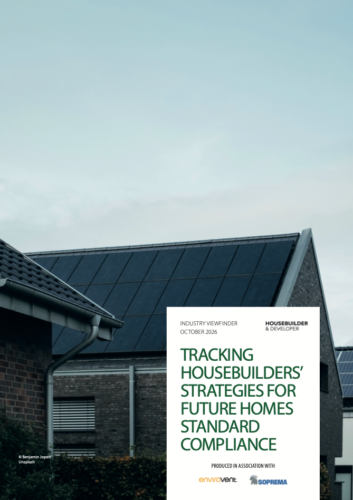
The Future Homes Standard, due to come into force on 24 March 2027, with a 12-month transition period, represents a significant shift in how new homes are designed, constructed, heated and powered. Alongside the introduction of the Home Energy Model and revisions to Parts L and F of the Building Regulations, the Standard aims to deliver homes producing at least 75% fewer carbon emissions than those built to 2013 standards.
However, achieving compliance presents considerable challenges for housebuilders and developers. Rising construction costs, tighter building fabric requirements, the transition to low-carbon heating systems, improved ventilation and greater use of renewable technologies are placing additional pressure on already constrained profit margins. Skills shortages, supply chain readiness, electricity grid capacity and the need to rethink existing house designs further complicate the transition, particularly for SME housebuilders.
Ensuring that new homes perform as designed is another critical consideration. Improved airtightness, insulation continuity, ventilation commissioning and heat pump installation will require greater attention to construction quality and technical expertise. Our research found that 71% of respondents were very or moderately concerned about the performance gap between designed and actual building performance.
This whitepaper examines how the housebuilding industry is preparing for the Future Homes Standard, drawing on research into building fabric, heating strategies, ventilation, glazing, renewable technologies and construction methods. It explores the commercial and operational challenges facing the sector, including build cost inflation, installer skills shortages, procurement pressures, grid constraints and customer demand.
The findings provide valuable insight into industry readiness, emerging specification trends and the practical strategies housebuilders are adopting to achieve compliance at scale, while protecting profitability, maintaining construction quality and avoiding disruption to development programmes.
Request the full report
Tagged
OrganisationsEnviroVent Soprema