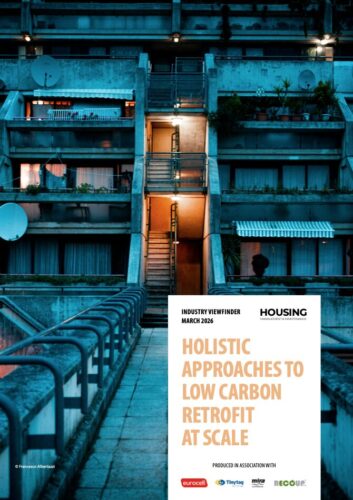
With the UK’s social housing sector undertaking the retrofit of around 4 million homes to cut carbon emissions and energy bills, it is time to assess progress. ‘Wave three’ of the Social Housing Decarbonisation Fund – now the Warm Homes Fund – has allocated £1.29bn to support upgrades to 140,000 homes by 2028, improving energy efficiency and reducing reliance on fossil fuels.
The government’s £13.2bn retrofit commitment to 2030 signals continued investment, even as further funding rounds remain unconfirmed. Rising fuel costs and wider cost-of-living pressures have strengthened the social case for retrofit, alongside net zero goals.
Targets remain ambitious: all rented homes must reach EPC C by 2030, requiring a significant acceleration in retrofit activity. At the same time, tenant wellbeing is becoming central. Improved airtightness must be balanced with effective ventilation to ensure healthy indoor environments, while Awaab’s Law has tightened standards around damp and mould.
Across the sector, organisations are adopting a range of strategies to deliver retrofit at scale. Many are moving towards deep, whole-house approaches that address building fabric, heating systems and renewables together.
Housing Management & Maintenance’s white paper explores how retrofit is evolving, highlighting current practices, emerging innovations and the key challenges shaping delivery of resilient, low-carbon homes.